When a VA disability claim is denied, underrated, or assigned the wrong effective date, many Veterans search for help quickly.
Some search:
- “VA-accredited attorney near me”
- “veterans benefits attorney near me”
- “VA disability lawyer Virginia”
- “Yorktown veteran benefits attorney”
- “Hampton Roads VA disability appeals”
- “Newport News VA disability attorney”
Those are reasonable searches.
But the more important question is not just who is nearby.
The better question is:
Who is actually qualified to help with a VA benefits appeal, and what kind of help does your case need?
A Veteran should not have to guess. VA disability appeals can involve medical evidence, service records, lay statements, C&P exams, effective dates, rating criteria, secondary conditions, and choosing the correct review lane. The person helping you should understand how those pieces fit together.
VA accreditation matters
VA benefits work is not the same as ordinary legal marketing.
Veterans should know whether the person offering help is actually accredited by the Department of Veterans Affairs.
VA-recognized help may include:
- A Veterans Service Organization representative
- An accredited claims agent
- An accredited attorney
VA explains that an accredited attorney, claims agent, or Veterans Service Organization representative can help Veterans request a decision review.
Not everyone advertising “VA claim help” is properly accredited.
Before trusting someone with your claim, ask:
- Are you VA-accredited?
- Are you an attorney, claims agent, or VSO representative?
- What kind of VA matters do you handle?
- Do you handle appeals after denials?
- What is your strategy for this specific decision?
- Will you review the VA decision letter and evidence before recommending a lane?
- How do you communicate with clients?
- What fees, if any, apply?
A trustworthy representative should be willing to answer those questions clearly.
VSO, claims agent, or attorney: what is the difference?
There is no single right answer for every Veteran.
Different kinds of representatives may be helpful in different situations.
Veterans Service Organizations
Veterans Service Organizations, often called VSOs, can be a good starting point for many Veterans.
A VSO representative may help with:
- Filing an initial claim
- Understanding VA forms
- Submitting basic evidence
- Reviewing VA letters
- Helping Veterans navigate the system
Many VSO services are free.
For some Veterans, especially those filing a straightforward initial claim, a VSO may be enough.
But if the claim has already been denied, involves complex evidence, requires legal argument, includes an effective-date dispute, involves a bad C&P exam, or has been mishandled more than once, the Veteran may want a deeper review.
Accredited claims agents
Accredited claims agents are non-attorneys who are authorized to help with VA benefits matters.
Some claims agents are very experienced and knowledgeable. Others may focus on specific parts of the process.
A Veteran considering a claims agent should ask about:
- VA accreditation
- Experience with the issue involved
- Whether the agent handles appeals
- How evidence is developed
- Whether medical opinions or lay statements may be needed
- How fees work
- Whether the agent will explain the appeal strategy in writing
The key is not the title alone. The key is whether the person understands the case and is authorized to help.
VA-accredited attorneys
A VA-accredited attorney can represent Veterans before VA in benefits matters.
An attorney may be especially helpful when the issue involves:
- A denied claim
- A low disability rating
- A wrong effective date
- A Board Appeal
- A Higher-Level Review argument
- A Supplemental Claim strategy
- A bad or incomplete C&P exam
- Secondary service connection
- TDIU
- Special Monthly Compensation
- A complicated medical nexus issue
- Multiple prior denials
- Evidence VA ignored or misunderstood
Not every case needs an attorney. But when a VA decision turns on evidence, legal error, rating criteria, or appeal strategy, attorney review can make a meaningful difference.
The problem is not just filing a form
Many Veterans are told to “just file an appeal.”
That is not a strategy.
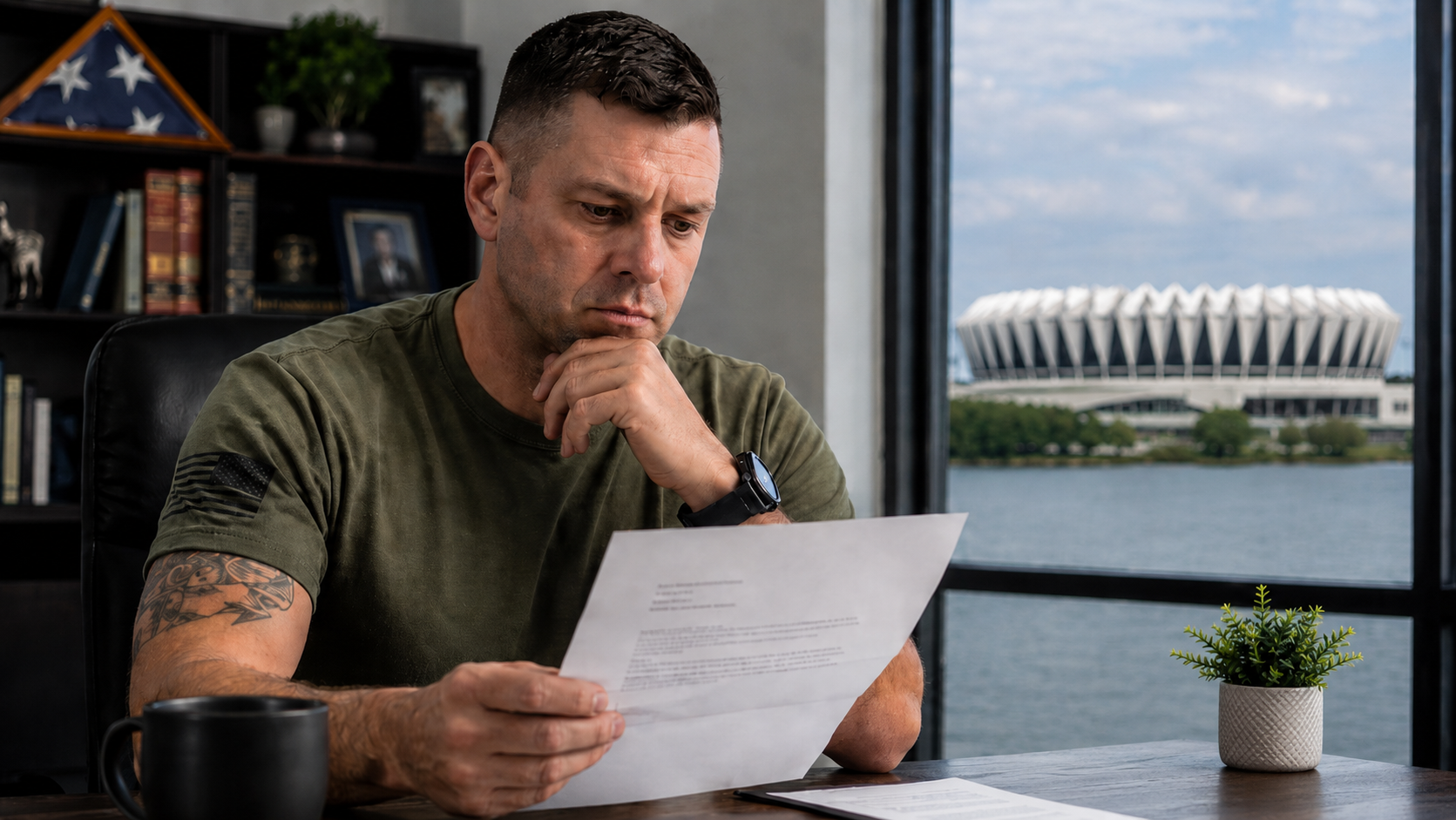
The first step should be reading the VA decision letter carefully.
The decision letter may show:
- What VA granted
- What VA denied
- What rating VA assigned
- What effective date VA used
- What evidence VA reviewed
- What favorable findings VA made
- Why VA denied the claim
- Whether VA relied on a C&P exam
- Whether VA missed private records
- Whether VA misunderstood lay statements
- Whether VA failed to consider secondary conditions
The appeal lane should depend on the reason VA gave.
Supplemental Claim, Higher-Level Review, or Board Appeal?
VA generally gives Veterans three main review options after a benefits decision:
- Supplemental Claim
- Higher-Level Review
- Board Appeal
Each lane has a different purpose.
A Supplemental Claim may be appropriate when the Veteran has new and relevant evidence. VA explains that new evidence is information not previously submitted, and relevant evidence is information that proves or disproves something in the claim.
A Higher-Level Review may be appropriate when VA made an error based on the evidence already in the file. VA explains that a Veteran cannot submit new evidence with a Higher-Level Review.
A Board Appeal may be appropriate when a Veterans Law Judge should review the case.
Choosing the wrong lane can waste time.
For example, if VA denied a claim because the record lacked a medical nexus, a Higher-Level Review may not solve the problem because no new evidence can be added. A Supplemental Claim with a strong medical opinion may be the better route.
But if the favorable evidence was already in the file and VA simply ignored it, Higher-Level Review may make more sense.
The right answer depends on the decision.
Evidence matters
VA disability appeals are usually won or lost on evidence.
VA says disability claim evidence may include:
- DD214 or other separation documents
- Service treatment records
- Medical evidence related to the illness or injury
- Doctor reports
- X-rays
- Medical test results
- Lay evidence from the Veteran or someone who knows about the condition
VA also explains that lay evidence can include written testimony from the Veteran or someone who knows about the condition or related events.
Many Veterans have symptoms that are real but not fully captured in medical records.
A spouse may describe sleep problems. A coworker may describe missed work. A fellow service member may remember an in-service injury. A family member may describe changes in mood, mobility, pain, or daily functioning.
The person helping with the appeal should know when lay evidence matters and how to use it.
Red flags Veterans should watch for
Veterans should be cautious if someone offering VA claim help:
- Guarantees a 100% rating
- Promises a specific outcome before reviewing the file
- Pressures the Veteran to sign immediately
- Refuses to explain VA accreditation status
- Does not review the VA decision letter
- Does not explain the appeal lane
- Focuses only on payment instead of evidence
- Tells the Veteran not to worry about deadlines
- Uses vague promises instead of a case-specific plan
- Cannot explain why VA denied the claim
- Treats every case the same way
A good representative should not need pressure tactics.
The Veteran should understand what is being filed, why it is being filed, what evidence is needed, and what deadline applies.
“Near me” does not always mean “best for my VA appeal”
Location matters, but VA benefits representation is different from many local legal matters.
A VA-accredited attorney can represent Veterans before VA regardless of where the Veteran lives. That means a Veteran in Yorktown, Newport News, Hampton, Norfolk, Chesapeake, Virginia Beach, Williamsburg, Richmond, or another part of Virginia may be able to work remotely with a VA-accredited attorney.
Many VA appeals can be handled through:
- VA decision letters
- Medical records
- Service records
- Phone calls
- Video meetings
- Secure document sharing
- Written argument
- Evidence development
- VA portals and mail
For some Veterans, local connection still matters. It can help to work with someone who understands Virginia, Hampton Roads, military culture, nearby installations, and the practical realities of service.
But the main question should be whether the representative understands VA benefits appeals.
Questions to ask before choosing help
Before choosing a representative, consider asking:
- Are you VA-accredited?
- Do you handle VA disability appeals?
- Have you reviewed the decision letter?
- What do you think VA got wrong?
- Which review lane do you recommend and why?
- Does the case need new evidence?
- Was the C&P exam adequate?
- Are there favorable findings we can use?
- Are there secondary conditions VA missed?
- Is the effective date correct?
- How will you communicate with me?
- What are the possible risks or weaknesses?
- What fees apply, if any?
- What happens if VA denies the appeal again?
The answers should be specific.
If the person cannot explain the plan in plain English, that is a problem.
What to gather before a consultation
Before speaking with a VA-accredited attorney or representative, gather:
- VA decision letter
- Rating decision
- Code sheet, if available
- C&P exam reports, if available
- DD214
- Service treatment records
- VA medical records
- Private medical records
- Prior appeal forms
- Nexus opinions or DBQs
- Lay statements
- Buddy statements
- Records showing work impact
- Records showing daily limitations
- Any VA correspondence about deadlines
If you do not have everything, start with the VA decision letter. That is usually the most important document for deciding what went wrong.
Why the right help matters
A denied claim can affect a Veteran’s monthly compensation, health care access, family stability, and future benefits.
A low rating can leave serious symptoms unrecognized.
A wrong effective date can reduce past-due benefits.
A missed secondary condition can keep the disability picture incomplete.
A poorly chosen appeal lane can delay the case.
The goal is not just to file something. The goal is to file the right thing, with the right evidence, at the right time.
Bottom line
If you are searching for a “VA-accredited attorney near me” after a VA disability denial, start with the most important question:
Is this person qualified, accredited, and able to explain a real strategy for my specific VA decision?
For some Veterans, a VSO may be the right starting point. For others, an accredited claims agent may be a good fit. For Veterans facing a denial, low rating, wrong effective date, bad C&P exam, or complicated appeal, a VA-accredited attorney may be worth considering.
Veterans in Yorktown, Newport News, Hampton Roads, and across Virginia should not have to navigate the VA appeals process alone or rely on vague promises.
Read the decision letter. Understand the reason for the denial. Choose the right review lane. Build the record. And work with someone who treats the claim like it matters.
This article is for general information only and is not legal advice. Reading this article or contacting Warrior Benefits Law does not create an attorney-client relationship unless we agree to representation in writing.
Sources
More articles you may find useful
These suggestions are selected from published Warrior Benefits Law articles and may rotate as new posts are added.
Yorktown and Hampton Roads Veterans: What to Do After a VA Disability Denial
If VA denied your disability claim or assigned a lower rating than expected, the next step matters. Here is what Veterans in Yorktown, Newport News, Hampton Roads, and across Virginia should know before choosing an appeal lane.
Read article
Why Warrior Benefits Law Takes a Different Approach to VA Disability Appeals
Veterans have many choices after a VA denial. Warrior Benefits Law combines firsthand military and VA claims experience with VA-accredited, attorney-led strategy, focused evidence development, and honest guidance.
Read article
Why Do Many Veterans Miss Out on VA Benefits?
Many veterans miss out on VA benefits because they wait too long, file without the right evidence, overlook secondary conditions, or choose the wrong appeal lane after a denial.
Read article
Why VA Claims Get Denied and What Veterans Should Do Next
A VA denial does not always mean the claim was weak. Many denials come down to missing evidence, weak nexus support, inadequate exams, rating issues, or choosing the wrong next step.
Read article
Top Mistakes Veterans Make After a VA Denial
After a VA denial, the next move matters. The most common mistakes involve missing deadlines, choosing the wrong review lane, sending unfocused evidence, and ignoring weak exams.
Read article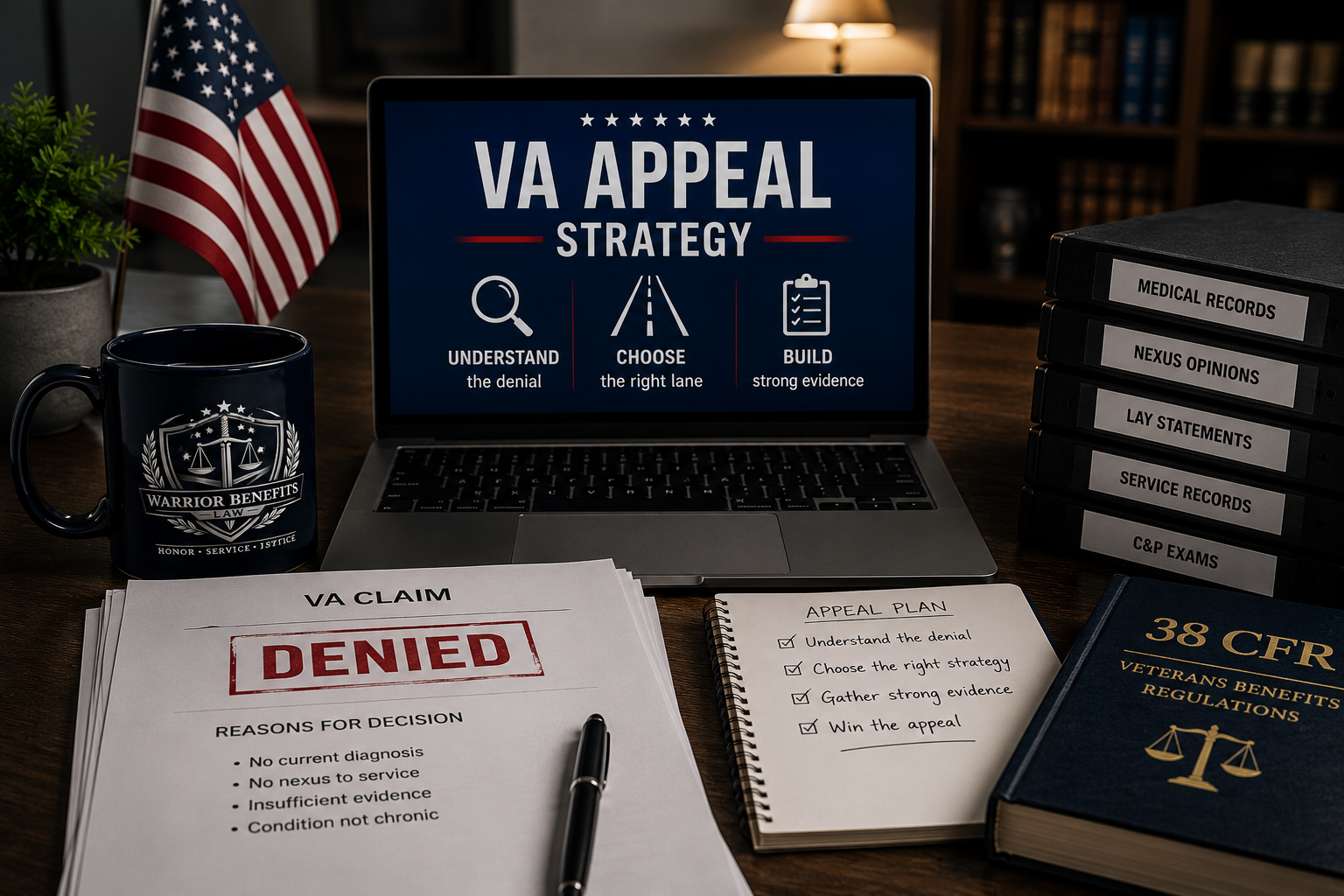
How to Win a VA Appeal by Choosing the Right Strategy
Winning a VA appeal usually starts with understanding the denial, choosing the right review lane, and building focused evidence that answers the reason VA denied the claim.
Read article