
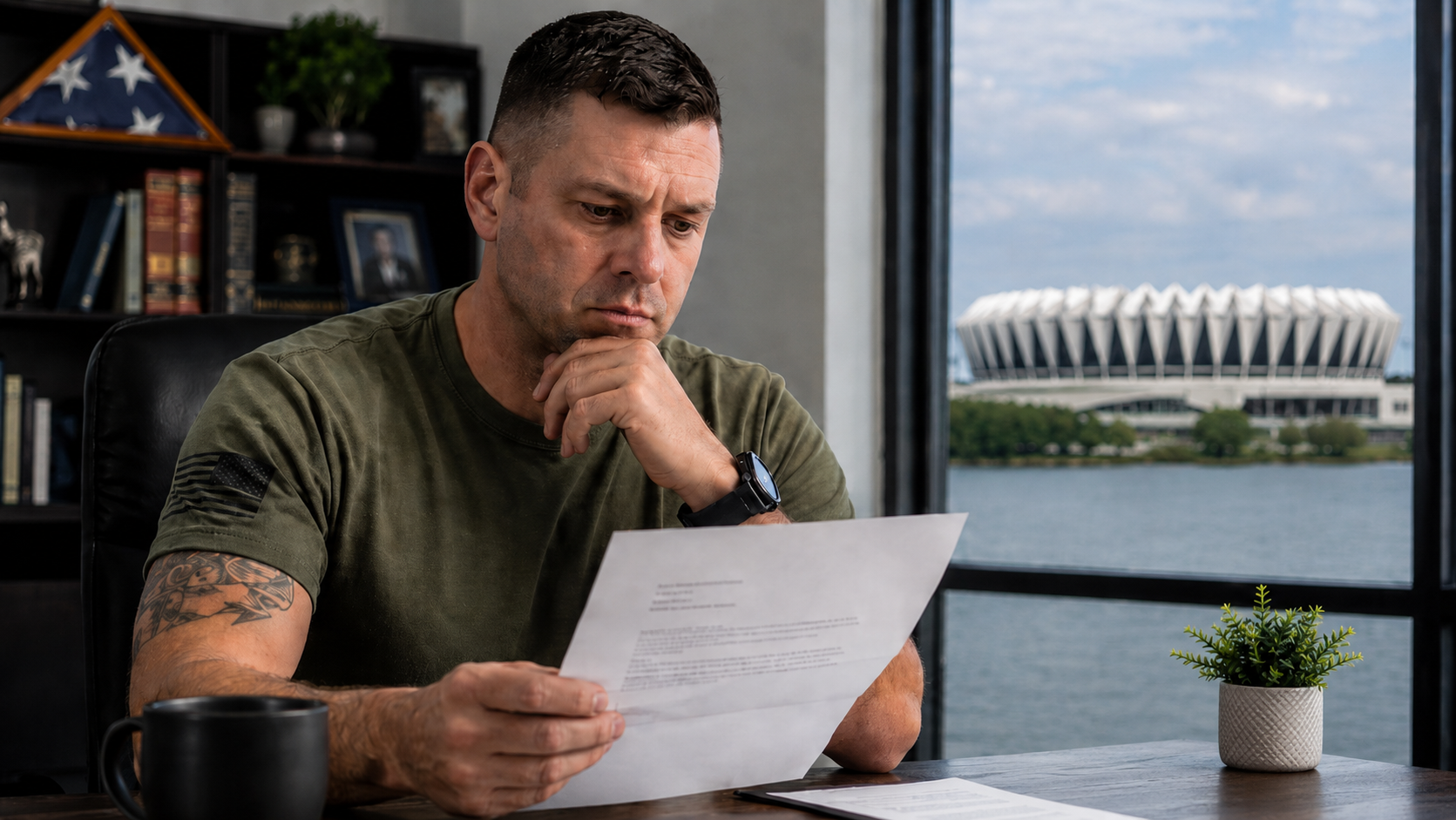
If VA denied your disability claim, assigned a lower rating than you expected, or gave you an effective date that does not seem right, the next step matters.
For Veterans in Yorktown, Newport News, Hampton, Norfolk, Chesapeake, Virginia Beach, Williamsburg, and the greater Hampton Roads region, the VA disability process can feel confusing even when the issue seems straightforward.
A denial does not always mean the claim is weak. Sometimes VA denied the claim because evidence was missing. Sometimes VA overlooked favorable records. Sometimes the C&P exam was inadequate. Sometimes VA applied the wrong standard. Sometimes the Veteran picked the wrong review lane after the decision.
That is why the first step after a VA denial should not be panic.
The first step should be understanding why VA denied the claim and what kind of appeal strategy fits the problem.
Start with the VA decision letter
Before filing another form, read the VA decision letter carefully.
Look for:
- The conditions VA granted
- The conditions VA denied
- The rating percentage assigned to each condition
- The effective date for each condition
- The evidence VA listed
- The reasons VA gave for each denial
- Any favorable findings
- Any missing records
- Any deadline to appeal or request review
Many Veterans focus only on the final rating number. But the real answer is usually in the “Reasons for Decision” section.
That section may show whether VA denied the claim because of:
- No current diagnosis
- No in-service event, injury, illness, or exposure
- No medical nexus
- Not enough evidence of severity
- An unfavorable C&P exam
- A missing service record
- A missing private medical record
- A failure to connect a secondary condition
- A disagreement over effective date
- A rating that does not match the symptoms
The appeal strategy depends on the reason VA gave.
The three main VA review options
Veterans who disagree with a VA benefits decision generally have three main review options:
- Supplemental Claim
- Higher-Level Review
- Board Appeal
Each lane has a different purpose.
Choosing the wrong lane can waste time.
Supplemental Claim: when new evidence is needed
A Supplemental Claim may be the right option when the case needs new and relevant evidence.
This can include:
- New medical records
- A private medical opinion
- A nexus letter
- A Disability Benefits Questionnaire
- Lay statements
- Buddy statements
- Updated treatment records
- Evidence of worsening symptoms
- Employment records
- Records showing continuity of symptoms
- Records showing toxic exposure or deployment history
VA explains that a Supplemental Claim is used when there is new and relevant evidence. New evidence means information not previously submitted to VA. Relevant evidence means information that tends to prove or disprove something in the claim.
This lane often makes sense when VA denied the claim because the record was incomplete.
For example, if VA denied a back condition because there was no medical link to service, a Supplemental Claim with a strong medical opinion may be more useful than simply asking another reviewer to look at the same incomplete file.
Higher-Level Review: when VA made an error on the existing record
A Higher-Level Review may be the right option when the evidence was already in the file and VA made a mistake.
No new evidence is allowed in Higher-Level Review.
This lane may fit when VA:
- Misread a medical record
- Ignored favorable evidence
- Failed to apply the correct rule
- Relied on an inadequate exam
- Failed to consider lay statements already in the file
- Failed to address favorable findings
- Assigned the wrong effective date based on the existing evidence
- Underrated symptoms already documented in the file
The key question is whether the record already contained enough evidence to show VA got it wrong.
If the claim needs new evidence, Higher-Level Review may not be the best first step.
Board Appeal: when a Veterans Law Judge should review the case
A Board Appeal takes the case to the Board of Veterans’ Appeals.
This can be appropriate when the issue needs judge-level review, when VA repeatedly misses the problem, or when the legal or factual dispute is significant.
Veterans generally choose among Board options such as:
- Direct Review
- Evidence Submission
- Hearing
Each option has different rules and timing.
Board Appeals can be powerful, but they are often slower than other review options. Veterans should think carefully before choosing this route, especially if the case could be fixed faster with targeted new evidence in a Supplemental Claim.
Evidence matters more than frustration
A denial can be frustrating, especially when the Veteran knows the condition is real.
But VA decisions are usually decided on evidence.
VA says disability-claim evidence may include:
- DD214 or other separation documents
- Service treatment records
- Medical evidence related to the illness or injury
- Doctor reports
- X-rays
- Medical test results
- Lay evidence from the Veteran or someone who knows about the condition
For many Veterans, lay statements can be especially useful.
A spouse, friend, coworker, fellow service member, or family member may be able to describe what they observed, such as:
- Sleep problems
- Pain behavior
- Panic attacks
- Trouble walking
- Memory problems
- Missed work
- Mood changes
- Isolation
- Difficulty standing or lifting
- Problems with daily activities
A good statement should be specific. VA does not need vague statements that simply say “he has pain.” It needs facts that explain what the person sees and how often it happens.
Common mistakes after a VA denial
Veterans in Yorktown, Newport News, and Hampton Roads often make the same mistakes after a denial.
Mistake 1: Filing the same claim again with no new evidence
If VA denied the claim because evidence was missing, refiling the same information may lead to another denial.
Mistake 2: Choosing Higher-Level Review when the record needs more proof
Higher-Level Review does not allow new evidence. If the case needs a nexus opinion, updated medical records, or lay statements, this lane may not fix the problem.
Mistake 3: Ignoring the effective date
Sometimes VA grants the claim but assigns the wrong effective date. That can affect past-due benefits.
Mistake 4: Focusing only on service connection and ignoring the rating
Even when VA grants service connection, the rating may be too low. The question then becomes whether the symptoms and functional limits support a higher evaluation.
Mistake 5: Missing secondary conditions
A service-connected knee condition may affect the back, hip, or opposite knee. Tinnitus may affect sleep or mental health. Chronic pain may contribute to depression or anxiety. Veterans should consider the full disability picture.
Mistake 6: Waiting too long
Deadlines matter. Veterans should read every VA decision carefully and act before the appeal period expires.
Why VA accreditation matters
Veterans should be careful about who they trust with a VA benefits case.
VA-accredited representatives can include:
- Veterans Service Organization representatives
- Accredited attorneys
- Accredited claims agents
VA says accredited attorneys, claims agents, and VSO representatives can help Veterans file claims or request decision reviews. VA also explains that VSO services are always free, while accredited attorneys and claims agents may charge fees for their services.
The important point is this: Veterans should know whether the person helping them is actually accredited by VA.
A Veteran should be cautious about any person or company that:
- Guarantees a 100% rating
- Pressures the Veteran to sign immediately
- Uses vague promises
- Refuses to explain the appeal strategy
- Charges questionable upfront fees
- Tells the Veteran not to read VA documents
- Does not clearly explain accreditation status
- Does not focus on the evidence in the record
Trust matters. So does competence.
Do you need to live in Yorktown or Newport News to get help?
No.
VA benefits representation is different from many state-court legal matters. A VA-accredited attorney can represent Veterans before the Department of Veterans Affairs regardless of where the Veteran lives.
That means a Veteran in Yorktown, Hampton, Newport News, Norfolk, Virginia Beach, Chesapeake, Williamsburg, Richmond, anywhere else in Virginia, or the United States may be able to work with a VA-accredited attorney remotely.
Many VA disability appeals can be handled through:
- VA decision letters
- Medical records
- Service records
- Secure document upload
- Phone calls
- Video meetings
- Written argument
- Evidence development
The Veteran does not necessarily need to live near the attorney’s office.
What to gather before asking for help
Before speaking with an attorney or accredited representative, gather as much of this as possible:
- The VA decision letter
- The rating decision
- The code sheet, if available
- C&P exam reports, if available
- VA medical records
- Private medical records
- Service treatment records
- DD214
- Prior appeal documents
- Lay statements
- Buddy statements
- Any nexus opinions or DBQs
- Records showing missed work or functional limits
Do not worry if you do not have everything. The decision letter is usually the best place to start.
A practical example
Suppose a Veteran in Hampton Roads files a claim for a back condition.
VA denies the claim and says there is no link between the current diagnosis and service.
The Veteran has a current diagnosis. The Veteran also had back pain during service. But the file does not contain a medical opinion explaining the connection.
In that situation, a Supplemental Claim with a strong medical opinion may be more useful than a Higher-Level Review.
Now suppose the Veteran already submitted a favorable medical opinion, and VA ignored it. In that situation, Higher-Level Review may make more sense because the evidence was already in the record.
The right answer depends on why VA denied the claim.
The goal is not just to appeal. The goal is to appeal correctly.
Filing an appeal is not the same thing as having a strategy.
A strong VA appeal should answer:
- What did VA decide?
- What reason did VA give?
- What evidence did VA consider?
- What evidence did VA miss?
- What favorable findings can be used?
- What appeal lane fits the problem?
- What evidence should be developed before filing?
- What deadline applies?
Veterans deserve more than generic advice. They deserve a clear explanation of what went wrong and what can be done next.
Bottom line
If VA denied your disability claim or assigned a lower rating than expected, do not assume the decision is final.
Veterans in Yorktown, Newport News, Hampton Roads, and across Virginia should start by reading the decision letter carefully. The reason for the denial usually determines the right next step.
A Supplemental Claim may fit when new and relevant evidence is needed. Higher-Level Review may fit when VA made an error based on the existing record. A Board Appeal may fit when judge-level review is needed.
The best appeal is not always the fastest one. It is the one that fits the evidence and the reason VA denied the claim.
Warrior Benefits Law helps Veterans understand VA decisions, identify appeal options, and build a focused strategy for the next step.
This article is for general information only and is not legal advice. Reading this article or contacting Warrior Benefits Law does not create an attorney-client relationship unless we agree to representation in writing.
Sources
More articles you may find useful
These suggestions are selected from published Warrior Benefits Law articles and may rotate as new posts are added.
Why VA Claims Get Denied and What Veterans Should Do Next
A VA denial does not always mean the claim was weak. Many denials come down to missing evidence, weak nexus support, inadequate exams, rating issues, or choosing the wrong next step.
Read article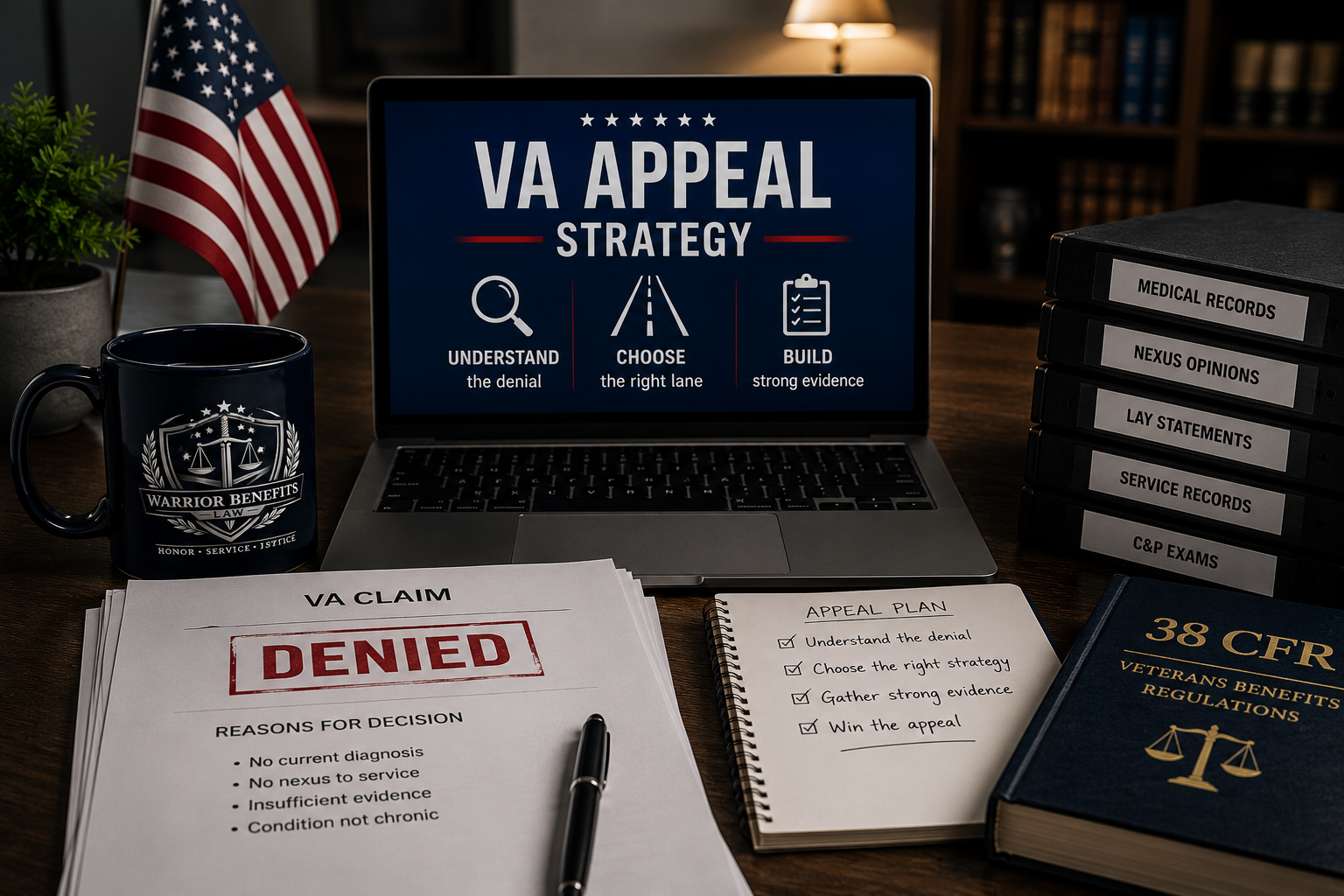
How to Win a VA Appeal by Choosing the Right Strategy
Winning a VA appeal usually starts with understanding the denial, choosing the right review lane, and building focused evidence that answers the reason VA denied the claim.
Read article
Why Do Many Veterans Miss Out on VA Benefits?
Many veterans miss out on VA benefits because they wait too long, file without the right evidence, overlook secondary conditions, or choose the wrong appeal lane after a denial.
Read article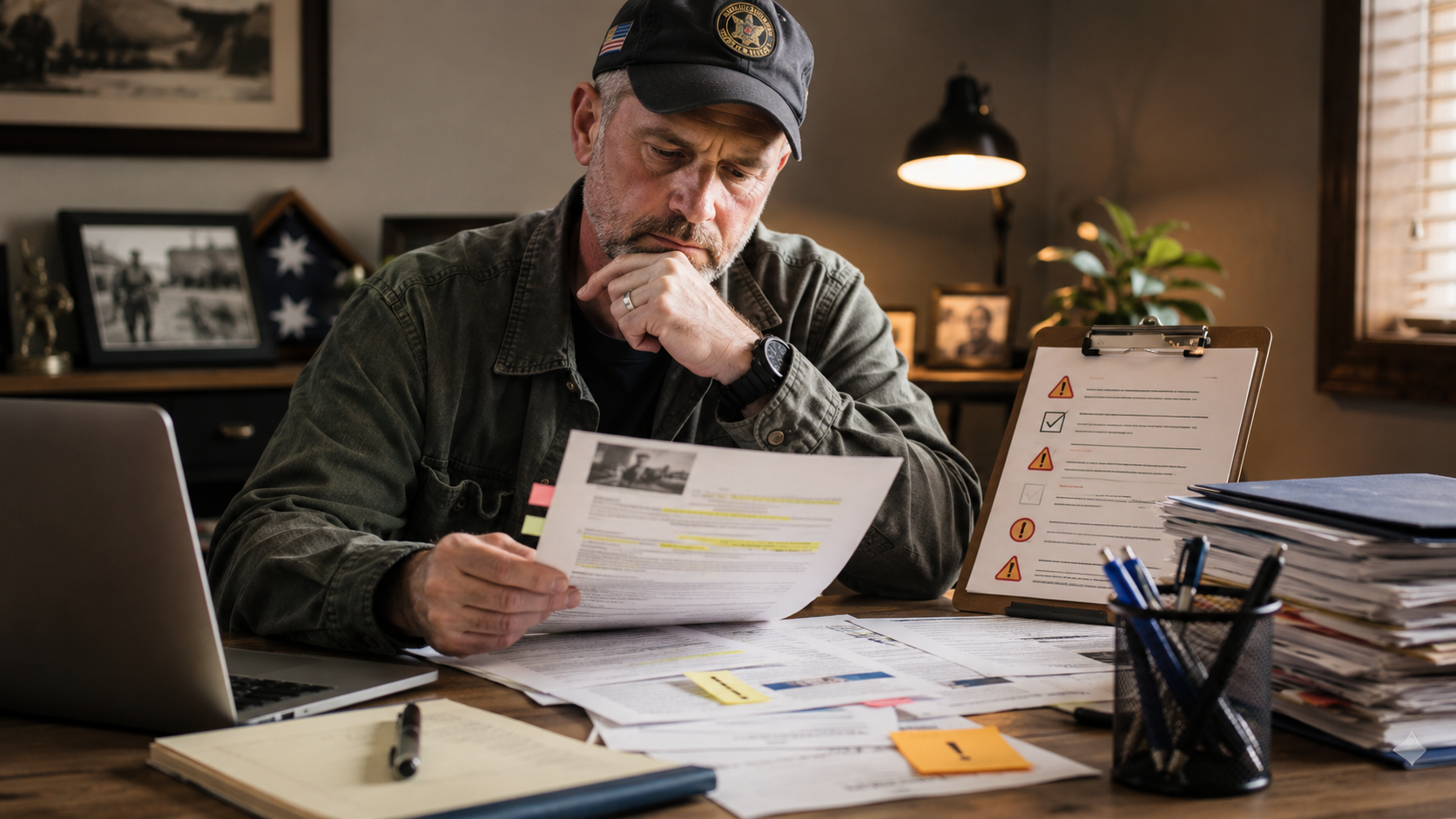
Top Mistakes Veterans Make After a VA Denial
After a VA denial, the next move matters. The most common mistakes involve missing deadlines, choosing the wrong review lane, sending unfocused evidence, and ignoring weak exams.
Read article
Why Warrior Benefits Law Takes a Different Approach to VA Disability Appeals
Veterans have many choices after a VA denial. Warrior Benefits Law combines firsthand military and VA claims experience with VA-accredited, attorney-led strategy, focused evidence development, and honest guidance.
Read article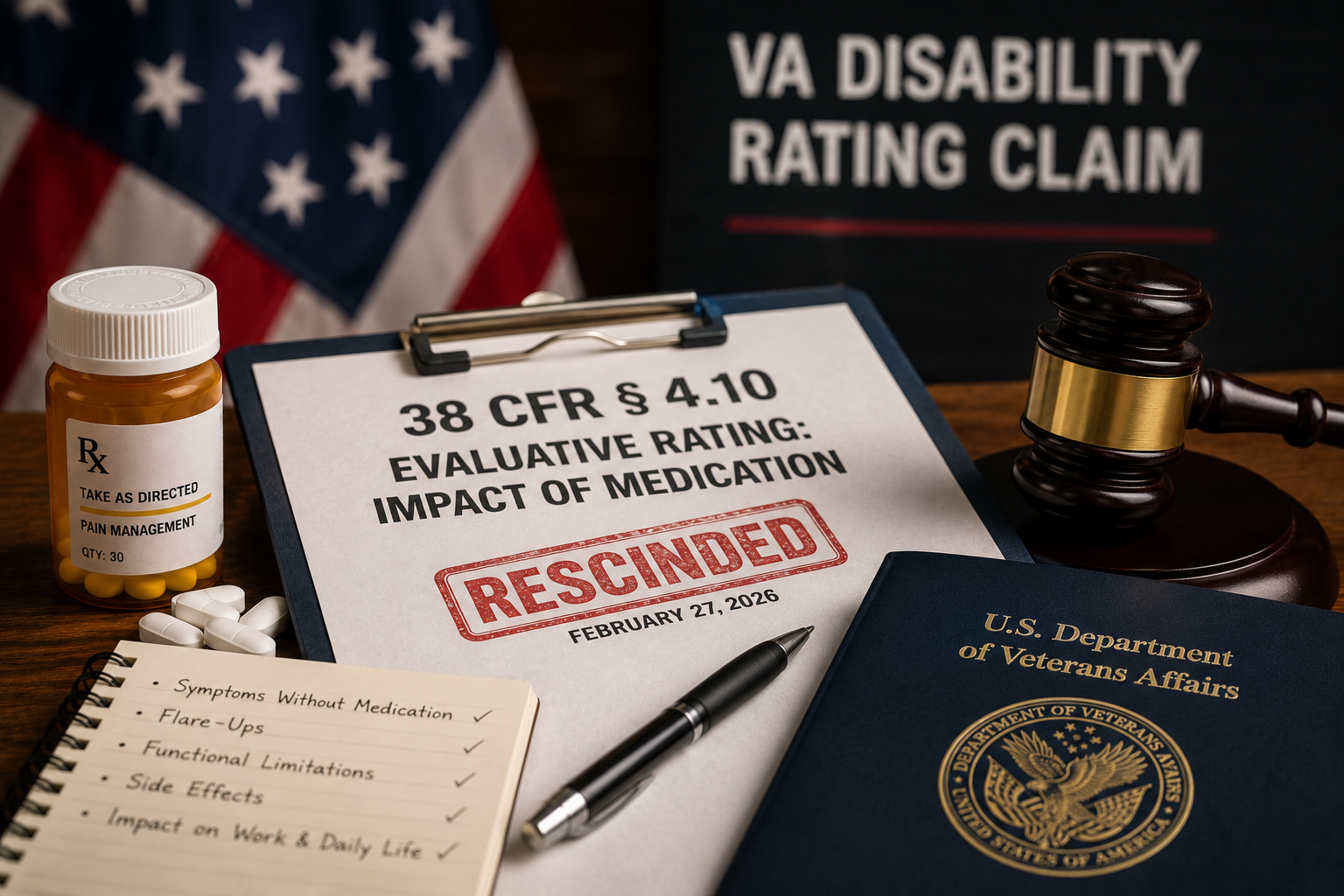
VA’s Medication Rule Reversal: What 38 CFR 4.10 Means for Your Disability Rating
VA briefly attempted to change how medication affects disability ratings under 38 CFR 4.10 in 2026. After immediate backlash, the rule was rescinded—but the legal debate over medicated vs. baseline severity continues to impact VA claims and appeals today.
Read article