Warrior Games 2026: What Wounded Service Members Teach Us About Recovery
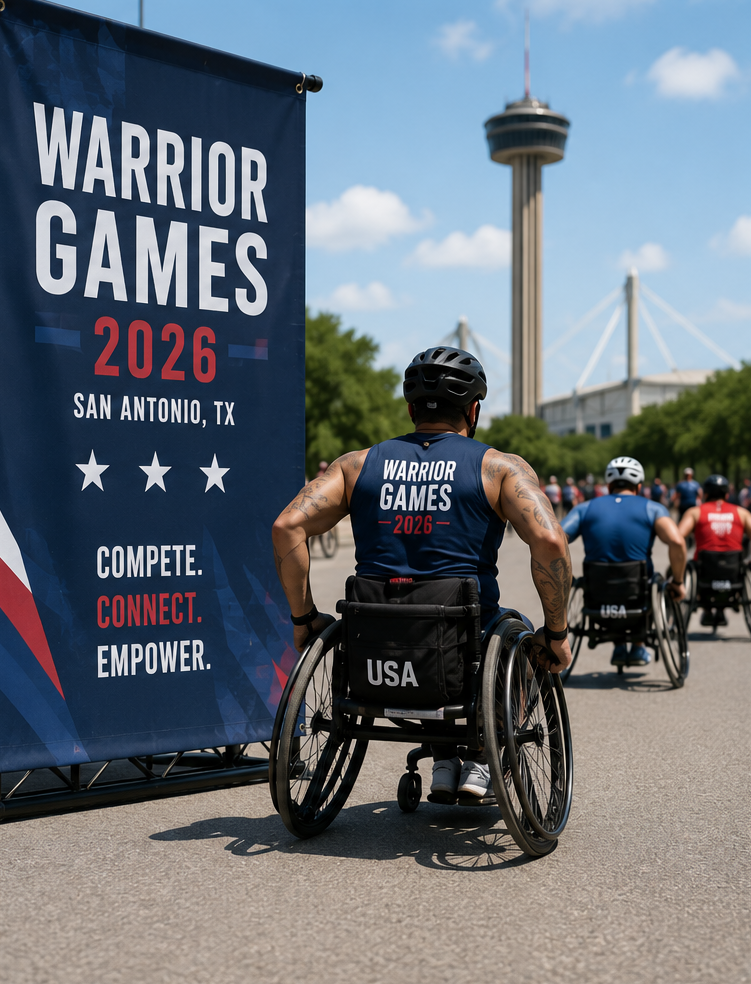
The 2026 Warrior Games are taking place in San Antonio, Texas, from June 13 through June 20.
For one week, wounded, ill, and injured service members and Veterans come together to compete in adaptive sports, support one another, and show what recovery can look like after serious injury, illness, or life-changing medical challenges.
The event is competitive, but it is not only about medals.
It is about resilience. It is about community. It is about finding a way forward after the body, mind, or life plan changes in ways no one expected.
What Are the Warrior Games?
The Warrior Games are an adaptive sports competition for wounded, ill, and injured service members and Veterans.
The official Warrior Games site describes the event as a way to enhance recovery and rehabilitation by exposing service members to adaptive sports. The games also demonstrate the incredible potential of wounded, ill, and injured service members through competitive athletics.
The sports include events such as:
- Archery
- Cycling
- Field
- Indoor rowing
- Pickleball
- Powerlifting
- Precision air
- Sitting volleyball
- Swimming
- Track
- Wheelchair basketball
- Wheelchair rugby
Teams represent the Army, Marine Corps, Navy and Coast Guard, Air Force and Space Force, and Special Operations Command.
That mix matters. The Warrior Games are not about one branch, one injury, one diagnosis, or one story. They bring together people whose service and recovery journeys may look very different, but who share a common understanding of what it means to rebuild.
Why Adaptive Sports Matter
Adaptive sports are not watered-down sports.
They are competitive, demanding, and often highly technical. They require strength, strategy, endurance, practice, teamwork, and discipline. The rules or equipment may be adapted, but the effort is real.
For many wounded service members and Veterans, adaptive sports can help restore something that injury or illness threatened to take away.
That may include:
- Confidence
- Physical strength
- Social connection
- Purpose
- Routine
- Mental health
- Independence
- Trust in the body again
- A sense of belonging
Recovery is not always linear. Some days are better than others. Progress can be slow. Pain, fatigue, frustration, grief, anxiety, and uncertainty can all be part of the process.
But adaptive sports can create a space where the focus shifts from limitation to possibility.
More Than Competition
The Warrior Games are powerful because they show recovery in public.
That matters.
Many injuries are visible. Some are not. A service member may have an amputation, spinal cord injury, traumatic brain injury, cancer history, chronic pain, PTSD, depression, anxiety, respiratory problems, neurological symptoms, or another condition that changed how daily life works.
The Warrior Games remind the public that recovery is not always about returning to who someone was before. Sometimes it is about building a new version of strength.
That kind of recovery deserves recognition.
The Military Culture of Pushing Through
Service members are often trained to push through pain, fatigue, and discomfort.
That mindset can be useful in the military. It can help people complete the mission, support the team, and keep going under pressure.
But after injury or illness, that same mindset can become complicated.
Some Veterans delay care because they do not want to complain. Some minimize symptoms because they are used to pushing through. Some compare themselves to others and decide they are not “hurt enough” to ask for help. Others do not realize how much their condition affects work, family life, sleep, mobility, mood, or daily functioning until years later.
The Warrior Games offer a different message: acknowledging injury is not weakness.
Recovery takes discipline too.
Why Families Matter
Recovery does not happen in isolation.
Behind many wounded, ill, and injured service members are spouses, parents, children, friends, caregivers, teammates, medical providers, therapists, coaches, and fellow Veterans.
Families often carry stress that outsiders do not see. They may help with appointments, transportation, medication, mobility, emotional support, paperwork, child care, finances, and day-to-day life.
The Warrior Games are not just meaningful for the athletes. They can also be meaningful for families who have watched the recovery process up close.
Seeing a loved one compete, connect, and be recognized can be powerful.
What Veterans Can Take From the Warrior Games
Most Veterans will never compete in the Warrior Games.
But the message still applies.
Recovery can take many forms. It may be physical therapy. It may be counseling. It may be a prosthetic fitting. It may be learning how to manage pain. It may be joining a peer group, returning to school, finding new work, reconnecting with family, or finally asking for help.
There is no single path.
For some Veterans, the hardest step is admitting that the injury or illness still matters. For others, the hard step is finding the right records, the right doctor, the right support system, or the right benefits.
The important thing is not to give up on the idea that life can still move forward.
A Light Note About VA Benefits
The Warrior Games should not be reduced to a benefits discussion. These athletes deserve to be recognized first as competitors, service members, Veterans, and people.
Still, the event is a reminder that service-connected injuries and illnesses can affect Veterans long after service ends.
For Veterans dealing with lasting conditions, records can matter. Medical records, service records, therapy notes, prosthetic records, mental health treatment, rehabilitation records, and lay statements may help explain how an injury or illness affects daily life.
If VA denies a claim, assigns a rating that seems too low, overlooks functional loss, or fails to consider secondary conditions, the Veteran may have review options.
The point is not that every recovery story becomes a VA claim. The point is that Veterans should not ignore the long-term impact of service.
Bottom Line
The 2026 Warrior Games are more than an adaptive sports competition.
They are a public reminder that wounded, ill, and injured service members and Veterans are still competing, still rebuilding, and still showing what strength can look like after hardship.
The medals matter. The competition matters. But the larger message matters too.
Recovery is not always about going back. Sometimes it is about finding the next mission.
This article is for general information only and is not legal advice. Reading this article or contacting our office does not create an attorney-client relationship unless we agree to representation in writing.